
OTA-Berlin Blog
Neuigkeiten aus der Nachbarschaft, Infos über Leben im Prenzlauer Berg
Hotel oder Apartment in Berlin buchen? Der perfekte Aufenthalt mit OTA-Berlin
Wenn es um die Suche nach der idealen Unterkunft in Berlin geht, stehen Reisende oft vor der Entscheidung zwischen einem Hotel und einem Apartment.
Hier bei OTA-Berlin bieten wir Ihnen beides an, und wir sind davon überzeugt, dass wir die perfekte Unterkunft für Ihre Reise haben.
Warum ein Hotel in Berlin buchen?
Ein Hotel in Berlin zu buchen, ist oft die erste Wahl für Reisende, die nach einem stressfreien und komfortablen Aufenthalt suchen und den Vorteil einer Rezeption und eines Frühstücks mit Service im selben Haus nutzen wollen.
Unser Hotel in Prenzlauer Berg bietet genau das. Unsere freundliche und internationale Rezeption steht Ihnen gerne mit Rat und Tat zur Seite und kann so manchen Insidertipp an Sie weitergeben. Auch Fahrräder können Sie direkt an unserer Rezeption leihen. Bei OTA-Berlin ist es uns ein Anliegen, dass sich unsere Gäste wohl fühlen. Unser Hotel verströmt eine warme und einladende Atmosphäre, weit entfernt von der Sterilität herkömmlicher Hotellobbys. Unser eklektisches Design spiegelt die Vielfalt und die Energie Berlins wider. Unser Hotel ist ein Ort, an dem sich Reisende entspannen und die Berliner Lebensart genießen können aber auch Service erhalten.
Der Vorteil unseres sehr zentral in Prenzlauer Berg gelegenen Hotels ist die Ruhe des zweiten Hinterhofes – eine wahre Oase inmitten des geschäftigen Stadtlebens.
Die Vorteile eines Apartments in Berlin
Berlin, eine Stadt, die niemals schläft, ist bekannt für ihre einzigartige Mischung aus Historie, Kultur und modernem Urbanismus. Inmitten dieses pulsierenden Stadtlebens liegt der charmante Stadtteil Prenzlauer Berg, der ein beliebtes Ziel für Besucher ist. Hier liegen auch alle unsere Unterkünfte.
Die Frage, die sich hier stellt, ist: Sollten Sie ein Hotel oder ein Apartment in Berlin buchen?
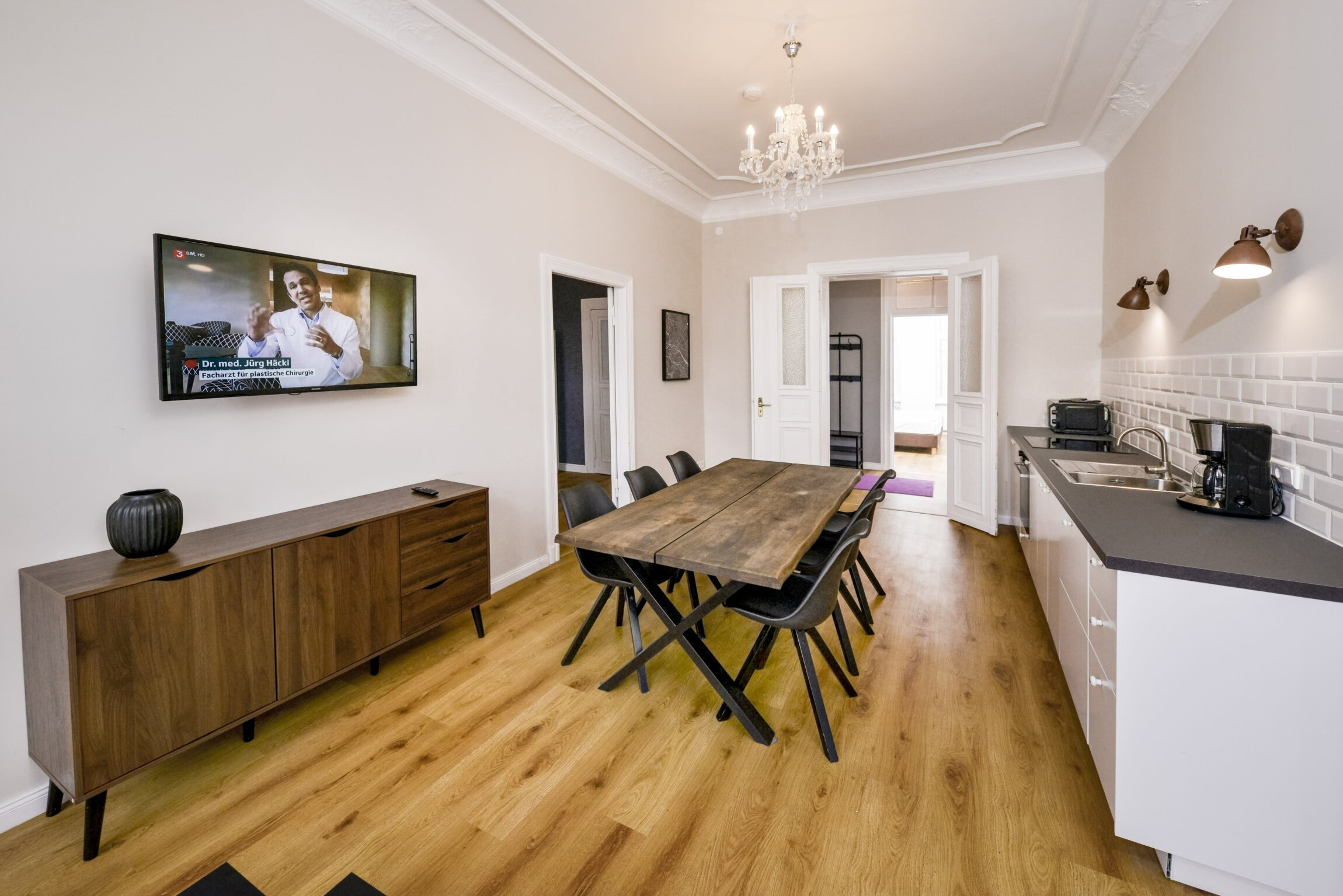
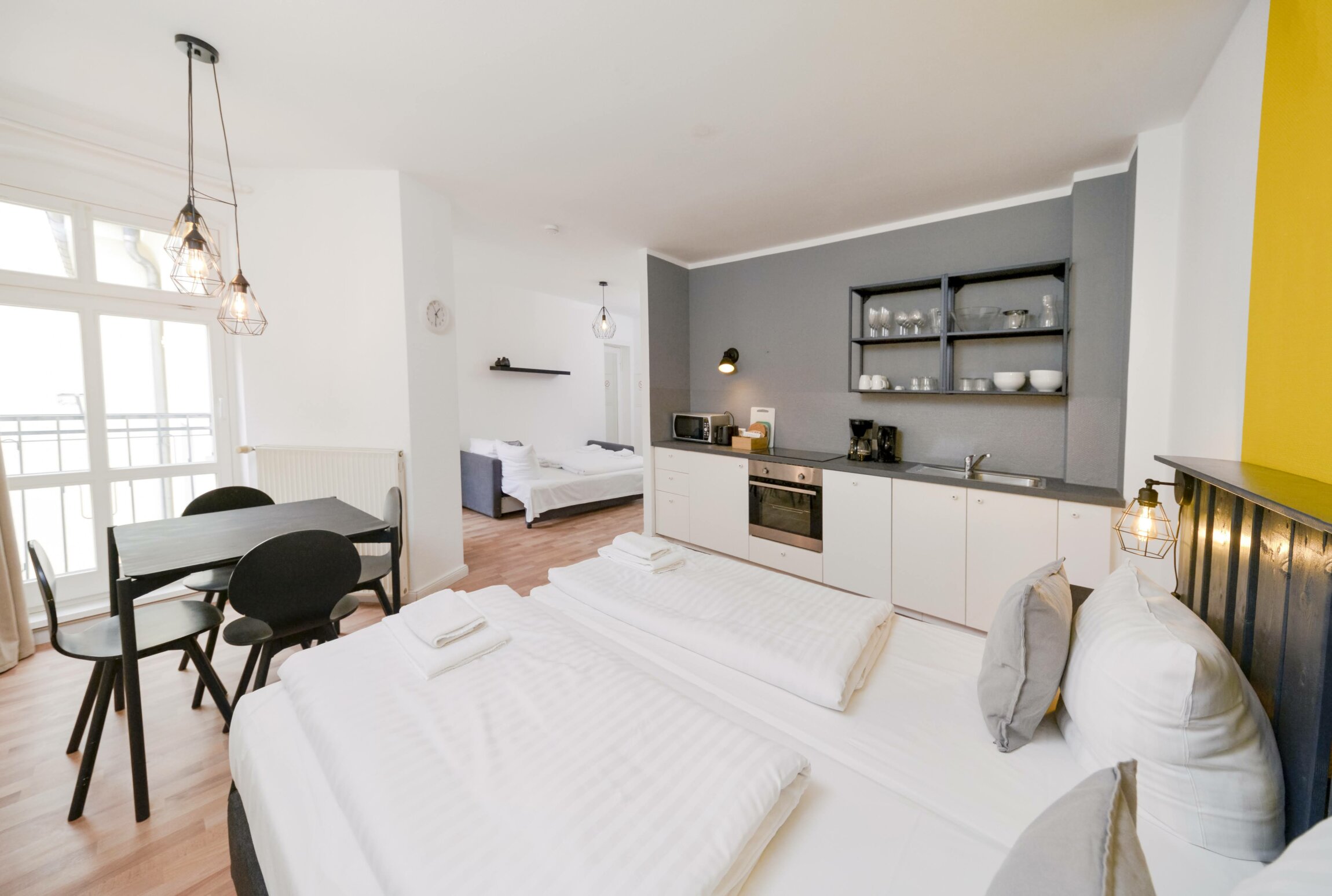
Für diejenigen, die einen längeren Aufenthalt in Berlin planen oder einfach nur mehr Platz und Privatsphäre wünschen, ist die Buchung eines Apartments in Berlin eine ausgezeichnete Wahl. Unsere Apartments im Prenzlauer Berg bieten den Komfort und die Gemütlichkeit eines Zuhauses. Jedes Apartment ist liebevoll eingerichtet und dekoriert, um eine warme und einladende Atmosphäre zu schaffen. Die voll ausgestatteten Küchen und geräumigen Wohnbereiche bieten den perfekten Rahmen, um sich nach einem Tag des Erkundens zu entspannen oder die Gesellschaft von Freunden und Familie zu genießen. Auch für Familien sind unsere Apartments die ideale Unterkunft. Frühstücken im Schlafanzug am eigenen Küchentisch – in unseren Apartments kein Problem. In unseren großen Family-Apartments mit mehreren Schlafzimmern können Sie Ihre lieben Kleinen auch abends schon ins Bett bringen und selbst noch Fernsehen oder einfach entspannen.
Entdecken Sie unsere Apartments
OTA-Berlin: Ihr Gastgeber im Prenzlauer Berg
Egal, ob Sie sich für ein Hotel oder ein Apartment entscheiden, OTA-Berlin ist Ihr zuverlässiger Gastgeber in Berlin. Unsere Unterkünfte im Prenzlauer Berg sind mehr als nur ein Ort zum Schlafen – sie sind Ihr Zuhause fern von Zuhause. Bei uns vereinen sich Berliner Lebensgefühl und Gastlichkeit. Wir schätzen die Vielfalt unserer Gästeschar und sind stolz darauf, jedem Besucher ein einzigartiges Berliner Erlebnis zu bieten. Mit OTA-Berlin wird Ihr Aufenthalt in der Hauptstadt sicherlich unvergesslich.
Egal aus welchem Grund Sie nach Berlin kommen, ein perfektes Reiseerlebnis wäre ohne einen Aufenthalt bei OTA-Berlin nicht möglich. Entdecken Sie die Freiheit und den Komfort, den unsere Unterkünfte bieten, und genießen Sie die authentische Berliner Gastfreundschaft, die wir unseren Gästen bieten.
Warum Sie als Reisender unbedingt ein Hostel in Berlin buchen sollten
Berlin, die pulsierende Stadt, die niemals schläft. Von der turbulenten Clubszene bis hin zu den ruhigen Parks, ist Berlin das Traumziel für jeden Backpacker, Kulturliebhaber und Abenteuer Suchenden. Und das Tolle daran? Erfahrungen mit Menschen aus der ganzen Welt teilen. In diesem Blog erfahrt ihr, wie ihr euer Berliner Abenteuer, insbesondere im charmanten Prenzlauer Berg, zu einem internationalen Erlebnis macht.
Unser Zuhause – der Prenzlauer Berg
Prenzlauer Berg, liebevoll “Prenzlberg” genannt, ist der perfekte Ausgangspunkt für jeden, der Berlin hautnah erleben möchte. Es hat diesen einzigartigen Mix aus Kultur, Geschichte und modernem Großstadtflair, der es zum Inbegriff des Berliner Lebens macht.
Hostel Prenzlauer Berg: Wo das echte Berliner Leben spielt
Stellt euch vor, ihr wacht in einem gemütlichen Hostel im Prenzlauer Berg auf, in einem komfortablen Raum und einem Hauch von Vintage-Charme. Das Fenster steht offen, und die Geräusche der Straße mischen sich mit dem Duft von frischem Kaffee, der aus der Gemeinschaftsküche kommt. Ihr trefft auf Menschen aus aller Welt, teilt Reiseerfahrungen und plant gemeinsam den Tag in Berlin.
Ein Hostel in Prenzlauer Berg bietet mehr als nur eine Übernachtungsmöglichkeit. Es ist ein Einblick in die echte Berliner Kultur, ein Ort zum Vernetzen, zum Entspannen, zum Lachen. Und das Beste: Es kostet nur einen Bruchteil eines Hotelzimmers.
Kulinarische Abenteuer für Sparfüchse
Ihr denkt, gut Essen in Berlin ist teuer? Denkste! Prenzlauer Berg hat für jeden Geldbeutel etwas zu bieten. Von Dönerbuden, die selbst den kritischsten Gourmet überzeugen, bis hin zu charmanten Cafés. Wenn ihr euch in der Gemeinschaftsküche eures Hostels selbst versorgen wollt, könnt ihr lokale Zutaten von den vielen Wochenmärkten der Umgebung kaufen. Oder wie wäre es mit einem Picknick im nahegelegenen Park? Im Hostel von OTA-Berlin gebt ihr das Tempo an!
Kostenlose und günstige Sehenswürdigkeiten
Berlin wäre nicht Berlin ohne seine historischen Stätten, Museen und Galerien. Und ratet mal? Viele davon sind kostenlos oder super erschwinglich! Das Mauermuseum, der Alexanderplatz, und selbst eine einfache Fahrt mit der U-Bahn kann zu einer Entdeckungsreise durch Berlin werden.
Also packt eure Koffer und lasst euer Abenteuer in Berlin beginnen!
Familienfreundlich und erschwinglich: Warum Apartments in Berlin die ideale Wahl für Ihren Familienurlaub sind
Berlin – die Stadt der unendlichen Möglichkeiten! Ob Sie ein Kunstliebhaber sind, Sie die Geschichte fasziniert oder Sie einfach nur ein paar Tage in einer der lebendigsten Städte Europas verbringen möchten – Berlin hat für jeden etwas zu bieten. Doch wie sieht es mit Familien aus?
Einen frischen Hauch Berliner Luft einatmen, während die Kleinen auf dem Spielplatz toben und die Großen den Charme der Stadt entdecken – das ist Urlaub in Berlin. Doch wer einmal mit der ganzen Familie in der Hauptstadt unterwegs war, der weiß, dass die Wahl der richtigen Unterkunft entscheidend für einen gelungenen Aufenthalt ist.
Es geht nicht darum wo Sie übernachten – es geht darum wo Sie leben
Stellen Sie sich vor, Sie öffnen die Tür und treten in eine Welt voller Komfort, Stil und familiärer Wärme. Sie haben nicht nur ein Apartment in Berlin gebucht – Sie haben ein Zuhause auf Zeit gefunden. Ein Zuhause weit weg von Zuhause.
Unsere Apartments sind nicht nur gemütlich und schick, sie sind auch geräumig und praktisch eingerichtet. Hier können Sie sich auf ein frisch zubereitetes Frühstück in Ihrer eigenen Küche freuen, während die Kinder ein selbst organisiertes Kissenschlacht-Turnier im Wohnzimmer veranstalten.
Unsere Apartments sind voll ausgestattet mit allem, was eine Familie braucht: Einer Küche, in der Sie Ihre Lieblingsgerichte kochen können, genug Schlafzimmern für alle und einem gemütlichen Wohnzimmer, in dem man sich nach einem Tag voller Abenteuer entspannen kann.
Im Herzen Berlins – einfach mitten im Leben
Unsere Apartments befinden sich im Herzen Berlins, dem Prenzlauer Berg. Hier ist unser Zuhause. Von hier aus ist alles nur einen Katzensprung entfernt. Starten Sie Ihren Tag mit einem entspannten Spazierpark am Mauerpark, wo die Kinder auf dem Spielplatz herumtollen, während Sie sich auf einem der vielen Flohmärkte ein einzigartiges Souvenir aus der Hauptstadt sichern können.
Sie haben Ihren Aufenthalt in Berlin noch nicht perfekt durchgeplant? Entdecken Sie hier den OTA-Berlin Neighbourhood Guide
Freiheit und Flexibilität – Leben wie ein waschechter Berliner
Ein Aufenthalt in unseren OTA-Berlin Apartments bietet Ihnen die Möglichkeit, das waschechte Berlin zu erleben. Schlendern Sie über den Wochenmarkt, wo Sie frisches Obst und Gemüse direkt von den lokalen Bauern kaufen können. Entdecken Sie versteckte Schätze in den vielen kleinen Läden und Cafés, die nur wenige Schritte von Ihrem Apartment entfernt sind. Und am Ende des Tages kehren Sie in Ihr Berliner Zuhause zurück, wo Sie und Ihre Familie die Eindrücke des Tages Revue passieren lassen und neue Pläne für den nächsten aufregenden Tag in der Hauptstadt schmieden können.
Gastfreundlichkeit in Berlin: Warum ein Hostel in Prenzlauer Berg der perfekte Ort für Backpacker ist
Berlin riecht nach Abenteuer und Freiheit, der Sound der Stadt klingt nach einer Mischung aus Kiezgesprächen, Straßenmusik und nächtlichem Clubbeat. Sie wollen eintauchen, mittendrin sein, in diesem pulsierenden Leben und gleichzeitig einen Ort zum Ankommen und Wohlfühlen finden? Dann ist ein Hostel in Prenzlauer Berg genau Ihr Ding!
Berlin ist ein lebendiges Melting Pot von Kultur, Geschichte und Lifestyle, das Backpacker aus aller Welt anzieht. Aber um die Stadt wirklich zu erleben, geht es um mehr als nur um die Sehenswürdigkeiten – es geht auch um die Art der Unterkunft, die Sie wählen. In diesem Zusammenhang ist ein Hostel in Prenzlauer Berg eine fantastische Option. Aber warum genau? Und wie unterscheidet sich ein Hostel von einem Hotel oder Apartment?
Was macht ein Hostel aus?
Ein Hostel ist mehr als nur ein günstiger Ort zum Schlafen. Es ist eine soziale Unterkunft, die darauf abzielt, Reisende aus aller Welt zusammenzubringen. Im Gegensatz zu Hotels oder Apartments, dreht sich in einem Hostel alles um Gemeinschaft und Austausch. Ob es um gemeinsame Mahlzeiten in der Küche, spannende Gespräche in der Lounge oder gemeinsame Aktivitäten in der Stadt geht – in einem Hostel bist du Teil einer lebendigen, globalen Gemeinschaft.
Hostels sind lebendige Orte, die Sie dazu einladen, an gemeinsamen Aktivitäten teilzunehmen. Ob es sich um eine organisierte Pub-Crawl-Tour handelt, gemeinsames Kochen in der Hostel-Küche oder das spontane Teilen von Reisetipps und Erfahrungen – in einem Hostel sind Sie nie allein.
Ein Hostel ist nicht nur eine alternative Unterkunftsoption – es ist eine Lebenseinstellung und ein Schlüssel zu einer Welt voller Möglichkeiten, Lernen und Austausch.
Warum ist ein Hostel in Prenzlauer Berg die perfekte Wahl für Backpacker?
Ein Hostel in Prenzlauer Berg zu buchen, bedeutet, einen der lebendigsten und kreativsten Bezirke Berlins direkt vor der Haustür zu haben. Prenzlauer Berg bietet eine Vielzahl von trendigen Bars, gemütlichen Cafés und kulturellen Highlights. Das Beste daran ist, dass Sie die meisten Orte bequem zu Fuß oder mit dem Fahrrad erreichen können – so werden Sie zum echten Berliner!
In deinem Hostel in Berlin können du einen Mix aus lokalem Leben und internationalem Flair erleben. Und das Beste: Nach einem langen Tag voller Entdeckungen in der Stadt können Sie in die Gemütlichkeit und Geselligkeit Ihres Hostels zurückkehren. Hier finden Sie eine Gemeinschaft, die bereit ist, Geschichten auszutauschen, neue Freunde zu finden und gemeinsam die aufregende Berliner Nacht zu erkunden.
Aber warum sollte man ein Hostel in Prenzlauer Berg wählen, wenn man nach Berlin kommt? Es gibt viele Gründe dafür, aber hier sind die wichtigsten:
- Im Herzen des Geschehens: Prenzlauer Berg – das ist kein einfacher Bezirk, sondern das pulsierende Zentrum von Berlin, wo Geschichte auf Hipster-Flair trifft und die Nacht zum Tag wird. Ein Hostel in Prenzlauer Berg zu wählen, heißt, dort zu leben, wo das Leben tobt. Sie werden inmitten der Stadt aufwachen, umgeben von den wichtigsten Sehenswürdigkeiten. Ob zu Fuß oder mit dem Rad, hier sind die Wege kurz und das Abenteuer groß!
- Ein Ort zum Ankommen: In Hostels wird aus Fremden Freunde. Gerade in einem Viertel wie Prenzlauer Berg, das seine Arme für die Welt öffnet und multikulturelles Leben zelebriert, spüren Sie dieses Gemeinschaftsgefühl mit jeder Faser. Hier können Sie lachen, diskutieren und die Welt entdecken – gemeinsam mit Menschen, die genauso neugierig auf die Welt sind wie Sie.
- Der Preis ist heiß: Bei einem Hostel in Prenzlauer Berg bekommt Ihr Budget Flügel. Warum? Weil Sie im Vergleich zu Hotels oder Apartments eine Menge Geld sparen und dabei nichts vermissen. Mit jedem gesparten Euro können Sie noch tiefer in das Berliner Leben eintauchen – perfekt für Backpacker, die das maximale aus ihrem Geld herausholen wollen
- Mit vollem Service ins Abenteuer: Hostels in Berlin sind mehr als nur ein Bett für die Nacht. Hier bekommen Sie einen Stadtplan in die Hand gedrückt, einen Fahrradschlüssel und Tipps für die coolsten Events der Stadt. Diese kleinen Extras machen den Unterschied und verwandeln Ihren Aufenthalt in Berlin in eine unvergessliche Erfahrung, von der Sie noch lange erzählen werden.
Berlins grüne Oasen: Die besten Parks in und um Prenzlauer Berg
Berlin, die pulsierende Hauptstadt Deutschlands, wird oft mit ihren historischen Sehenswürdigkeiten, dem vibrierenden Nachtleben und der einzigartigen Kultur verbunden. Während einer Reise nach Berlin gibt es aber noch etwas anderes, das entdeckt werden muss: Berlins grüne Oasen. Ob Sie in einem Apartment in Berlin übernachten oder die Annehmlichkeiten eines Hostels in Berlin nutzen, verpassen Sie nicht die Gelegenheit, die erstaunlichen Parks in und um Prenzlauer Berg zu erkunden.
Für Ihren nächsten Trip nach Berlin hat OTA-Berlin die besten Parks in und um Prenzlauer Berg zusammengestellt, die einen Besuch wert sind.
Volkspark Friedrichshain
Beginnen wir mit dem ältesten öffentlichen Park Berlins, dem Volkspark Friedrichshain. Diese weitläufige grüne Oase ist ein perfekter Ort zum Entspannen, Joggen oder für ein gemütliches Picknick. Wenn Sie also planen, Ihren Urlaub in Berlin zu verbringen und dabei in einem Apartment oder Hostel in der Nähe des Prenzlauer Bergs unterkommen möchten, sollten Sie diesen Park auf jeden Fall besuchen.
Mauerpark
Ein weiterer unverzichtbarer Halt auf Ihrer Reise nach Berlin ist der berühmte Mauerpark. Einst Teil der Berliner Mauer, ist dieser Park heute ein beliebter Treffpunkt für Einheimische und Touristen. Jeden Sonntag verwandelt sich der Park in einen bunten Flohmarkt, auf dem Vintage-Kleidung, Kunst und regionale Delikatessen angeboten werden. Zudem sollten Sie sich die Open-Air-Karaoke nicht entgehen lassen, die für viele ein absolutes Highlight des Mauerparks ist.
Kollwitzplatz
Der Kollwitzplatz ist ein charmantes grünes Juwel inmitten des belebten Prenzlauer Bergs. Mit seinen schönen Grünflächen, Spielplätzen und umliegenden Cafés ist er der perfekte Ort zum Entspannen nach einer langen Erkundungstour durch Berlin. Besuchen Sie am Wochenende eines der vielen Biomärkte, um frische regionale Produkte zu entdecken.
Kollwitzplatz
Zum Abschluss unserer Tour durch die grünen Oasen Berlins sollten Sie noch unbedingt den Volkspark Prenzlauer Berg besuchen. Mit seinen sanften Hügeln und weitläufigen Grünflächen bietet der Park eine hervorragende Gelegenheit, die Stadt aus einer neuen Perspektive zu betrachten. Er ist auch ein beliebter Ort für verschiedene Outdoor-Aktivitäten wie Joggen, Radfahren und Grillen.
Diese grünen Oasen sind nur einige der vielen fantastischen Parks in und um Prenzlauer Berg, die während Ihres nächsten Trips nach Berlin unbedingt einen Besuch wert sind. Ob Sie in einem stilvollen Apartment in Berlin übernachten oder die gesellige Atmosphäre eines Hostels in Berlin bevorzugen – nehmen Sie in den grünen Oasen Berlins eine Auszeit von der pulsierenden Hauptstadt und finden Sie Entspannung und Ruhe.
Denken Sie daran, dass eine Reise nach Berlin nicht nur die historischen Monumente und das pulsierende Nachtleben beinhaltet, sondern auch die Möglichkeit, die natürliche Schönheit und Ruhe in den vielen Parks der Stadt zu genießen. Also packen Sie Ihr Picknick, nehmen Sie Ihre liebsten mit und erkunden Sie die grünen Oasen Berlins.
Leben wie ein Einheimischer: Tauchen Sie ein in das authentische Berliner Leben in Prenzlauer Berg
Berlin ist bekannt für seine Vielfalt, seinen Kreativgeist und seine einladende Atmosphäre. Aber um das wahre Herz und die Seele dieser faszinierenden Stadt kennenzulernen, brauchen Sie mehr als nur einen flüchtigen Besuch. Sie müssen sich selbst in den pulsierenden Rhythmus des städtischen Lebens stürzen, und es gibt keinen besseren Ort dafür als Prenzlauer Berg.
Prenzlauer Berg, ein Viertel, das für seine energetische Atmosphäre, seine kulturelle Vielfalt und seine lebendige Kunstszene bekannt ist, bietet den perfekten Ausgangspunkt, um Berlin aus der Perspektive eines Einheimischen zu erleben. Und das Beste daran? Mit einem “Apartment Berlin” oder einer “Unterkunft Prenzlauer Berg” können Sie mitten im Geschehen leben und jeden Tag die Stadt und ihre Leute in ihrer ganzen Fülle erleben.
Wohnen Sie in der lebendigsten Ecke Berlins
Die lebendige Atmosphäre von Prenzlauer Berg zieht Menschen aus aller Welt an und macht das Viertel zu einem Schmelztiegel der Kulturen. Hier finden Sie eine bunte Mischung aus Altbauten und moderner Architektur, gesäumt von lebendigen Straßencafés, Boutiquen, Galerien und Restaurants, die für jeden Geschmack etwas bieten.
In einem “Apartment Berlin” in Prenzlauer Berg zu wohnen, bedeutet, jeden Tag inmitten dieser faszinierenden Vielfalt aufzuwachen. Beginnen Sie Ihren Tag mit einem Spaziergang entlang der Kastanienallee, gönnen Sie sich ein Frühstück in einem der charmanten Cafés, oder schlendern Sie durch die Wochenmärkte, um frische Produkte für Ihre eigene Küche zu besorgen.
Eine Community, die sich wie zu Hause anfühlt
Mehr als nur die atemberaubende Architektur und das lebendige Straßenleben, es ist die Gemeinschaft von Prenzlauer Berg, die Ihr Aufenthalt in einer “Unterkunft Prenzlauer Berg” zu einer wirklich einzigartigen Erfahrung macht. Die Bewohner des Viertels sind bekannt für ihre Offenheit und Gastfreundschaft, und Sie werden schnell feststellen, dass Sie mehr als nur ein Besucher sind.
Hier können Sie Teil von Gemeinschaftsveranstaltungen sein, die vom Kiez selbst organisiert werden, von Straßenfestivals über Kunstausstellungen bis hin zu Nachbarschaftstreffen. Sie werden auch feststellen, dass es nie an Gelegenheiten fehlt, neue Freundschaften zu schließen und spannende Menschen kennenzulernen.
Entdecken Sie die Kultur und Geschichte von Berlin
Prenzlauer Berg ist mehr als nur ein Wohnviertel – es ist ein Fenster in die Geschichte und Kultur von Berlin. Von den Spuren der Berliner Mauer über die Erinnerungen an die DDR bis hin zur blühenden Künstlerszene bietet das Viertel einen tiefen Einblick in das, was Berlin ausmacht.
Wenn Sie in einem “Apartment Prenzlauer Berg” wohnen, sind Sie nur einen Steinwurf entfernt von einigen der bedeutendsten Sehenswürdigkeiten und Kulturinstitutionen der Stadt. Ob Sie sich in die Geschichte vertiefen, die Kunstszene erkunden oder die kulinarischen Köstlichkeiten entdecken wollen, in Prenzlauer Berg haben Sie die Gelegenheit, all das und noch mehr zu erleben.
Das Leben in einem “Apartment Berlin” in Prenzlauer Berg ist mehr als nur eine Unterkunft. Es ist Ihre Eintrittskarte in ein authentisches Berliner Leben, voller Entdeckungen, Begegnungen und Abenteuer. Tauchen Sie ein in den Puls der Stadt, fühlen Sie ihre Energie und entdecken Sie, was es wirklich bedeutet, ein Berliner zu sein. Willkommen in Prenzlauer Berg, Ihr neues Zuhause in Berlin wartet auf Sie!
Ein Rundgang durch die Kunstszene des Prenzlauer Bergs
Stellen Sie sich vor, Sie schließen die Tür Ihres Apartments in Berlin und begeben sich auf eine Entdeckungsreise in die vibrierende Kunstszene des Prenzlauer Bergs. Klingt aufregend, nicht wahr? Lassen Sie uns gemeinsam auf eine lebendige Tour durch die kulturellen Juwelen dieses charmanten Stadtteils gehen!
Prenzlauer Berg ist weit mehr als nur ein Ort, an dem man lebt – es ist eine Bühne, auf der das Leben selbst ein ständig wechselndes Kunstwerk ist. Mit seinem reichen historischen Erbe, einer Fülle an Galerien, Ateliers und Kulturzentren, und seiner bunten Mischung aus Einheimischen und Besuchern, ist Prenzlauer Berg ein pulsierendes Herz der Kunstszene in Berlin.
Inmitten der Kreativität wohnen
Stellen Sie sich vor, Sie starten Ihre Tour direkt von Ihrem Apartment aus, welches sich als perfekte “Basis” für Ihre kulturellen Abenteuer in Prenzlauer Berg entpuppt. Apartments bieten nicht nur eine persönlichere und gemütlichere Unterkunft als Hotels, sondern erlauben es Ihnen auch, Teil der Gemeinschaft zu sein. Sie wachen auf, öffnen Ihr Fenster und können sofort das pulsierende Herz der Kunstszene in Prenzlauer Berg fühlen.
Kunst um jede Ecke
Beim Bummeln durch die Straßen des Prenzlauer Bergs werden Sie schnell feststellen, dass hier Kunst wirklich überall ist. Von beeindruckenden Wandgemälden und Straßenkunst, über unzählige Galerien bis hin zu regelmäßigen Kunstveranstaltungen und Festivals. Egal, wo Sie hinsehen, es gibt immer etwas zu entdecken!
Galerien und Ateliers: Orte der Begegnung und Inspiration
Prenzlauer Berg ist Heimat vieler Galerien und Ateliers, die eine Vielzahl von Stilen und Disziplinen vertreten. Von moderner Kunst über Fotografie bis hin zu Bildhauerei, egal, welche Art von Kunst Sie fasziniert, hier finden Sie es.
Vibrant Kulturzentren
Kulturzentren wie das Kulturbrauerei bieten ein umfangreiches Programm an Theateraufführungen, Filmvorführungen, Konzerten und vielem mehr. Es ist ein Ort, der die kulturelle Vielfalt Berlins und des Prenzlauer Bergs zelebriert und Menschen unterschiedlicher Hintergründe und Interessen zusammenbringt.
Inspirierende Events
Darüber hinaus bietet Prenzlauer Berg eine Fülle von Events, die die Kunstszene beleben. Von regelmäßigen Kunstspaziergängen, über Kunst- und Handwerksmärkte bis hin zu Kunstfestivals, es gibt immer eine Gelegenheit, inspirierende Kunst zu entdecken und Künstler aus der Umgebung kennenzulernen.
Ein lebendiges Mosaik
Prenzlauer Berg ist mehr als nur ein Ort – es ist ein lebendiges Mosaik aus Kulturen, Ideen und Inspirationen. Es ist ein Ort, der Kunst atmet und wo jeder Straßenblock, jede Ecke und jedes Gesicht ein Teil eines größeren Meisterwerks ist. Es ist der Ort, wo Sie nicht nur die Kunst sehen, sondern sie fühlen, atmen und leben können.
Ein Apartment in Prenzlauer Berg zu mieten, bedeutet, mitten im Geschehen zu sein. Es bedeutet, ein Teil dieses pulsierenden, kreativen und inspirierenden Herzens von Berlin zu sein. Es ist mehr als nur eine Unterkunft – es ist Ihr Zuhause in der Welt der Kunst. Also, worauf warten Sie noch? Entdecken Sie Prenzlauer Berg und lassen Sie sich von seiner Kunstszene verzaubern!
Boardinghouse in Berlin
Ein Boarding House ist eine komfortable und praktische Wohnalternative für Reisende, die eine Unterkunft auf Zeit suchen. Im Gegensatz zu herkömmlichen Hotels bieten Boarding Houses voll ausgestattete Apartments mit separaten Schlafzimmern, Küchen und Wohnzimmern, die den Bewohnern ein ideales Zuhause für einige Wochen oder Monate bieten.
Was auch immer Ihr Grund ist nach Berlin zu kommen, ein perfektes Reiseerlebnis ohne einen Aufenthalt bei OTA-Berlin ist nicht möglich! Wir erklären Ihnen, worauf Sie bei einem Boardinghouse auf jeden Fall achten sollten und wie Ihr Berlin Trip zum perfekten Reiseerlebnis wird!
Die Lage
Nun ja – machen wir uns nichts vor. Niemand möchte nach einem unvergesslichen Abend im Berliner Nachtleben noch 45 Minuten im Taxi sitzen. Deshalb ist eines der wichtigsten Kriterien für ein gutes Boarding House die Lage. Ob Tourist oder Geschäftsreisender, wenn Sie Berlin besuchen, ist es immer von Vorteil, ein Apartment in zentraler Lage zu wählen.
Die Apartments von OTA-Berlin befinden sich alle mitten im Prenzlauer Berg und somit für Sie in einer optimalen Ausgangslage, um einen urbanen Abend in Berlin zu erleben. Hier trifft die Berliner Kultur auf einen internationalen Touristen-Flair. Der Prenzlauer Berg vereint die Berliner Vielfalt und ist ein beliebtes Zuhause auf Zeit für Menschen aus der ganzen Welt. Zentraler und näher am Geschehen Wohnen? Nicht möglich!
Komplizierter Check-In? Auf gar keinen Fall!
Kurz eingecheckt und nichts wie raus die Stadt erleben! Berlin möchte entdeckt werden und bietet für Menschen aus der ganzen Welt unzählige Möglichkeiten dazu. Nichts ist ärgerlicher, als sich nach einer längeren Anreise mit einem nicht funktionierenden Check-In auseinanderzusetzen. Deshalb sind alle Apartments von OTA-Berlin mit einem Keysafe ausgestattet, was Ihnen ermöglicht, jederzeit und innerhalb von wenigen Minuten ganz selbstständig einzuchecken.
Sie kommen abends an und die Rezeption hat geschlossen? Keine Sorge! Bei uns erhalten Sie Ihren Schlüssel auch außerhalb der Öffnungszeiten und können somit Ihren Aufenthalt nach Ihren Belieben anpassen.
Die Ausstattung
Ist klar – wenn man einmal in Berlin ist, möchte man die Stadt entdecken und den Berliner Lebensstil leben und nicht die ganze Zeit im Apartment sitzen. Dennoch ist die Ausstattung des Boarding Houses ein weiterer wichtiger Faktor, welcher Ihren Aufenthalt bequem und heimisch gestaltet. Stellen Sie sicher, dass Sie in einer sauberen und gepflegten Umgebung wohnen und informieren Sie sich unbedingt im Vorhinein über die Ausstattung Ihres Apartments.
Besonders voll ausgestattete Küchen, schnelle Internetverbindungen und Reinigungsservices eignen sich optimal dazu, Ihre Wohnung auf Zeit heimisch und bequem zu gestalten.
Der Faktor Flexibilität
Ein großer Vorteil von Boarding Houses ist der Faktor Flexibilität. Sie sind mehrere Wochen in Berlin und suchen ein richtiges Zuhause auf Zeit? Bei OTA-Berlin können Sie ganz bequem für längere Laufzeiten buchen und werden von einem eklektischen Design und geräumigen Apartments empfangen. Sie suchen nicht nur nach einem Schlafplatz, sondern möchten sich in Ihrem Apartment auch richtig heimisch fühlen und ggf. auch Freunde oder Bekannte empfangen? OTA-Berlin bietet Ihnen eine Vielzahl von verschiedenen Apartment-Typen an und stellt eine echte Alternative für herkömmliche Hotels dar.
Kundenbewertungen
Achten Sie vor Ihrer Buchung unbedingt auf das Bewertungsprofil des Boardinghouses. Durch Kundenbewertungen erhalten Sie einen konkreten Einblick auf die Qualität des Boardinghouses und können sich so im Vorfeld von der Sauberkeit, der Lage und der Ausstattung Ihres Apartments überzeugen.
OTA-Berlin empfängt eine Vielfalt seiner Gästeschar aus allen Teilen der Welt. Deshalb sind wir umso stolzer darauf, dass wir uns bester Reputation erfreuen können.
Wir haben ein offenes Ohr für Ihre Fragen und gute Beratung während Ihres Berlin Aufenthalts!
Apartment im Prenzlauer Berg – eklektisches Design und Vielfalt unserer Gästeschar
Das Wohnen im Prenzlauer Berg – wie is dit eigentlich? Leben und Wohnen im Prenzlauer
Berg bedeutet pure Vielfalt und Einzigartigkeit. Hier trifft die Berliner Kultur auf einen
internationalen Touristen-Flair. Der Kiez bietet unzählige Möglichkeiten zum Essen, Trinken,
Shoppen und Entspannen. Sie haben Lust auf ‘ne zeitlang im Herzen Berlins wohnen? Bei
OTA-Berlin vereinen sich Berliner Lebensgefühl und Gastlichkeit!
Buchen Sie jetzt Ihr Apartment
OTA-Berlin bietet Ihnen eine große Auswahl an eklektisch ausgestatteten Apartments in der
Gegend – perfekt für kurze oder längere Aufenthalte. Egal ob Sie alleine reisen oder in einer
Gruppe unterwegs sind, wir haben das passende Apartment für euch. Gemütlicher
Kochabend statt Restaurantbesuch? Kein Problem, alle Apartments sind mit modernen
Annehmlichkeiten wie WLAN und einer voll ausgestatteten Küche ausgestattet, damit Sie
sich in der pulsierenden Hauptstadt wie zu Hause fühlen können.
Wohnen im Prenzlberg – wie is dit eigentlich?
Bars, Cafés und Authentizität pur – Berlin ist einfach echt! Der Kiez ist voll von unzähligen
Restaurants und Grünflächen. Der berühmte Mauerpark ist nicht weit entfernt und fasziniert
Menschen aus der ganzen Welt mit authentischen Flohmärkten und elektrisierender
Live-Musik. Sie suchen nach einem etwas anderen Reisemitbringsel? Die Kiez Flohmärkte
und die Kastanienallee sind bekannt für ihre indie Läden / Second-Hand-Boutiquen und
bieten für die Vielfalt unserer Gästeschar die perfekte Möglichkeit den Charme des
Prenzlauer Bergs auf der ganzen Welt weiterzutragen.
Der Prenzlauer Berg – mehr als nur ein Ortsteil, ein
Lebensgefühl!
Der Prenzlauer Berg steht für seine lebhafte Kulturszene! Haben Sie Lust auf ein paar
Sidefacts zu Ihrem zukünftigen Kiez? – Der Name “Prenzlauer Berg” stammt von dem Fluss
Prenzlau, der durch den Ortsteil fließt und im Mittelalter als Grenze zwischen Berlin und
Brandenburg diente.
Hier gibt’s Theater, Konzerte, Museen, Galerien und bekannte Kultureinrichtungen wie die
Kulturbrauerei, das Theater im Delphi und die Kastanienallee. Doch was macht den
Prenzlauer Berg wirklich aus? Die Menschen! Hier treffen sich Künstler, Studenten, Familien
und Menschen aus aller Welt. Die vielen verschiedenen Kulturen und Lebensstile machen
den Prenzlauer Berg zu einem besonderen und lebendigen Ort und wir sind mächtig stolz,
ein Teil davon zu sein!
Ihr Apartment im Prenzlauer Berg – mitten im Geschehen
OTA-Berlin und seine eklektischen Apartments im Prenzlauer Berg spiegeln die Vielfalt und
das unverwechselbare Flair des Stadtteils wider. Mit einer einzigartigen Mischung aus Alt
und Neu, traditionellen und modernen Elementen, ist jedes unserer Apartments ein echtes
Unikat. Lassen Sie sich von unserem eklektischen Design begeistern und erleben Sie den
Prenzlauer Berg hautnah!
OTA-Berlin: Immer ein offenes Ohr für Sie!
Lassen Sie uns Berlin gemeinsam erleben! Wir haben immer ein offenes Ohr für Ihre Fragen
und stehen Ihnen jederzeit zur Verfügung. Sie suchen das perfekte Restaurant für Ihr Date
oder ein ruhiges Café, damit Sie Ihre Online-Meetings halten können? Oder brauchen Sie
unbedingt um 06:00 Uhr morgens ein Taxi, welches Sie zum Flughafen fährt? Unsere
Gastlichkeit nehmen wir ernst! Das Team von OTA-Berlin steht Ihnen jederzeit zur Verfügung
und hilft Ihnen bei der Planung Ihres Aufenthalts in Berlin.